Intro
What first remains in the mind upon entering the workshop is its quietness.
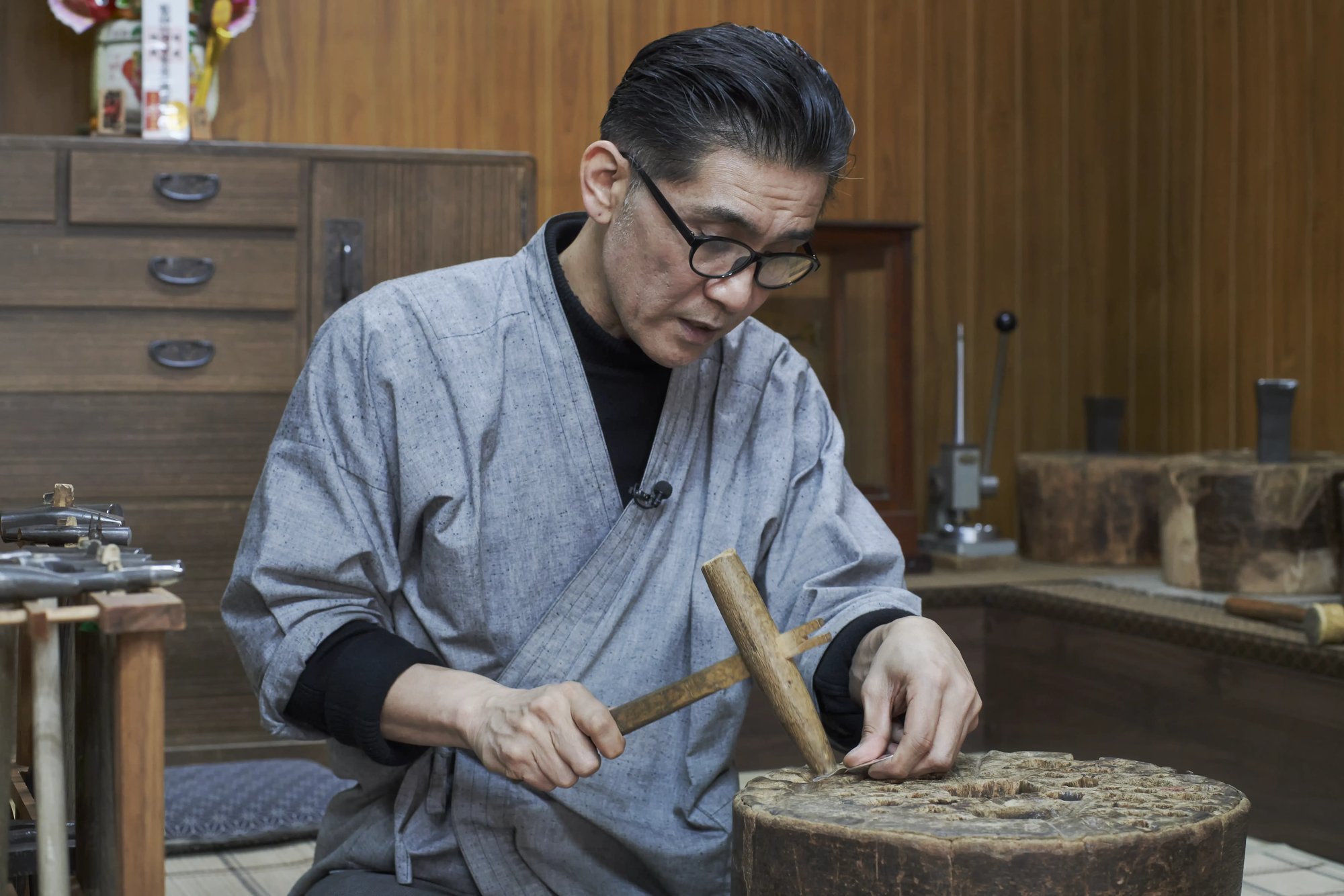
And yet, it is not the quietness of silence. There is the presence of the household shrine, the sound of a hammer touching silver, the presence of tools being set down, and the faint rhythm that arises each time a hand moves. Each of these seemed to resonate here as part of a continuation of long time. As I listened to Sōhaku Kamikawa and Sōki Kamikawa, it gradually became clear that the tradition preserved by the Kamikawa family, inheritors of the techniques of the Hirata school of metalwork with a history of more than 400 years, is not merely a matter of technique or family trade. It also includes the sounds and scents of the workshop that remained in the body from childhood, an attitude toward making things, and the idea of Atsurae—shaping something while thinking of the other person. In fact, both of them spoke of how the tonton-ton sound they heard while sitting near their grandfather, along with the smell and atmosphere of the workshop, still remains in their memory. It was striking that the starting point of inheritance exists first as a memory of the senses.
In this interview, we asked Sōhaku Kamikawa, the 12th generation, and Sōki Kamikawa, the 13th generation, what Gindendo has inherited, and what it is trying to hand on to the years ahead. The conversation begins with the practical beauty of Edo silverware, then moves quietly into the essence of the word Atsurae, the reason silver as a material gains depth the more it is used, and the sense of daily prayer and respect toward tools. Sōhaku speaks of Atsurae not as mere made-to-order work, but as giving form to something while thinking of the other person and even imagining that person’s future. Sōki speaks candidly about how he entered this path out of the feeling that the cultural flame must not be allowed to go out. To come to know the work of Gindendo is not only to come to know silver vessels, but also to understand how Japanese craftsmanship continues to live within time, prayer, and human relationships.
Atsurae: more than simply “made to order,” this Japanese term suggests a thoughtful act of tailoring that reflects the person, the context, and the intention behind the object.
A Craft Inherited Across Generations
The first thing I would like to touch on in speaking about Gindendo is the felt reality of the word “inheritance.”
In the world of craft, one often hears expressions such as inheriting technique, inheriting the family trade, or inheriting a generation. But listening to Sōhaku Kamikawa and Sōki Kamikawa, it seemed that inheritance exists as something more bodily, and closer to sensation. Both of them grew up right beside the workshop, and they speak of how the striking sounds they heard near their grandfather’s knees, the scents that filled the workshop, and the very air itself remain in their memory even now. Sōhaku says that the tonton-ton sound continues into his present work as an extension of everyday life, while Sōki, too, recalls that he learned that sound and atmosphere in his body from the moment he was born. Inheritance may be something that sinks into the five senses over long time even before one is formally taught anything.
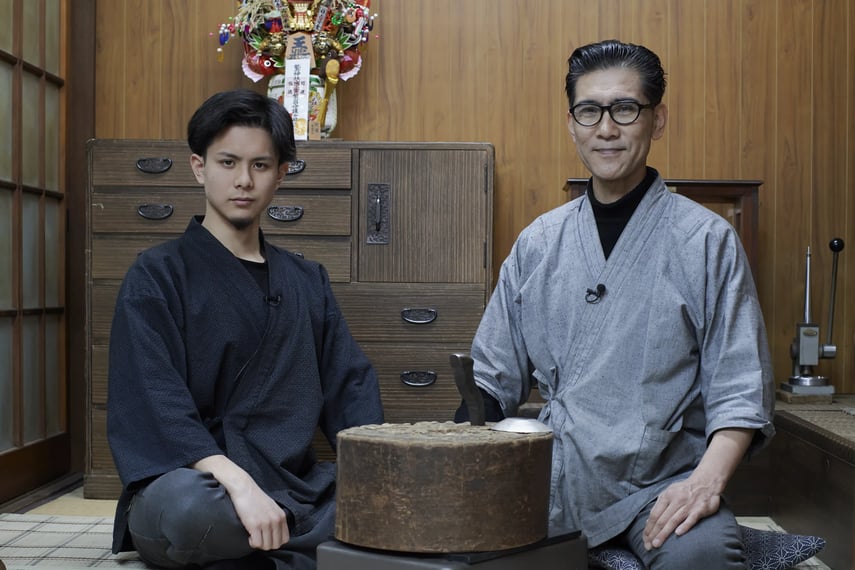
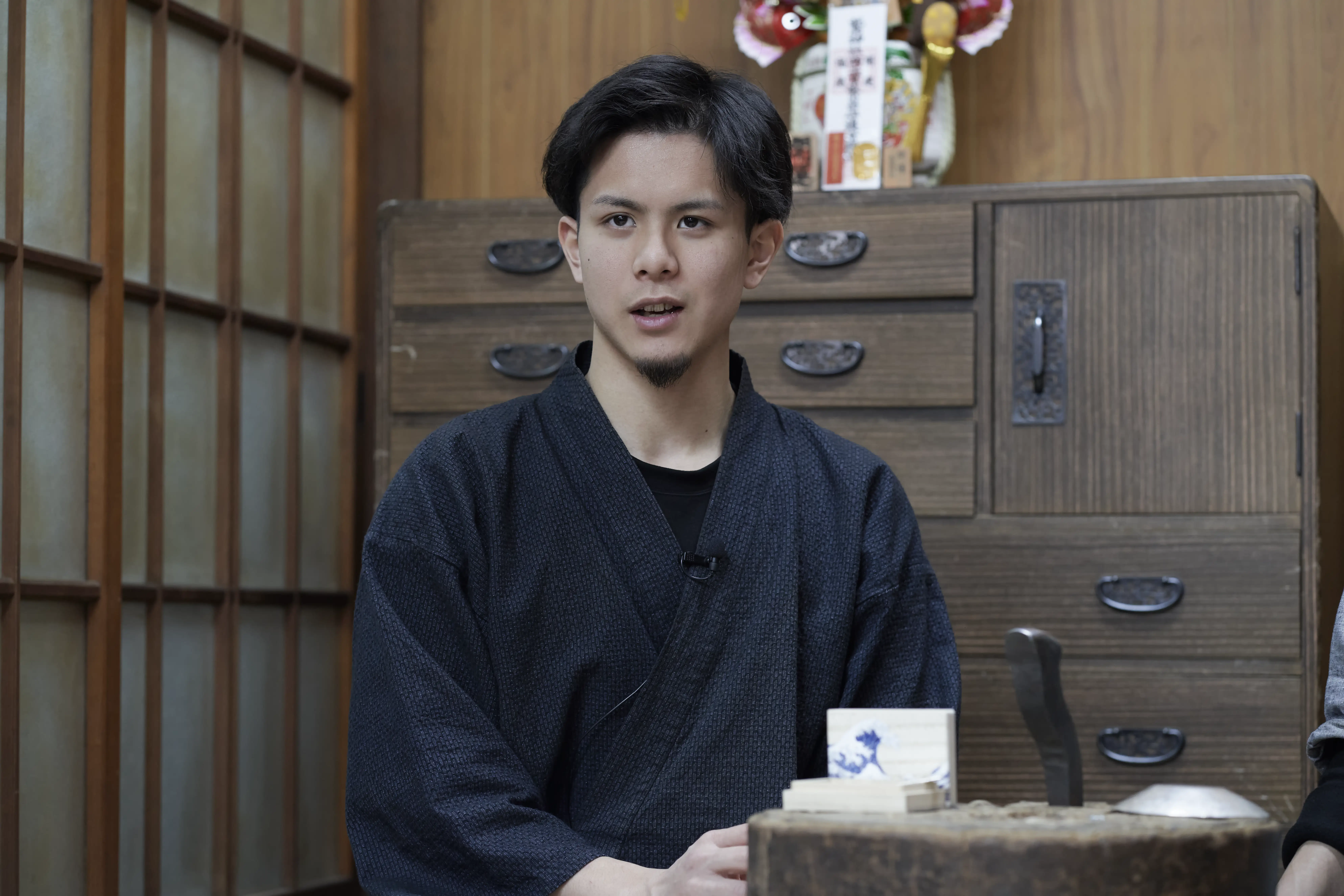
(Left: 13th generation Sōki Kamikawa (son), Right: 12th generation Sōhaku Kamikawa (father))
Toguri: For both of you, was the original experience of first encountering this work, after all, beside your grandfather?
Sōhaku Kamikawa: Yes, I think so. When I was little, my grandfather—who was still vigorous, even in his later years—would let me sit on his lap, and there was that rhythm as he struck: tonton-ton. That has stayed with me very strongly. When I was a child, I did not think it was anything special, but when I look back on it now, it was always flowing through daily life. So although my official career has been 33 years, in terms of feeling, it feels much longer—almost as if I have been doing this for 50 years.
Toguri: So even before learning the technique, there was already a feeling your body knew.
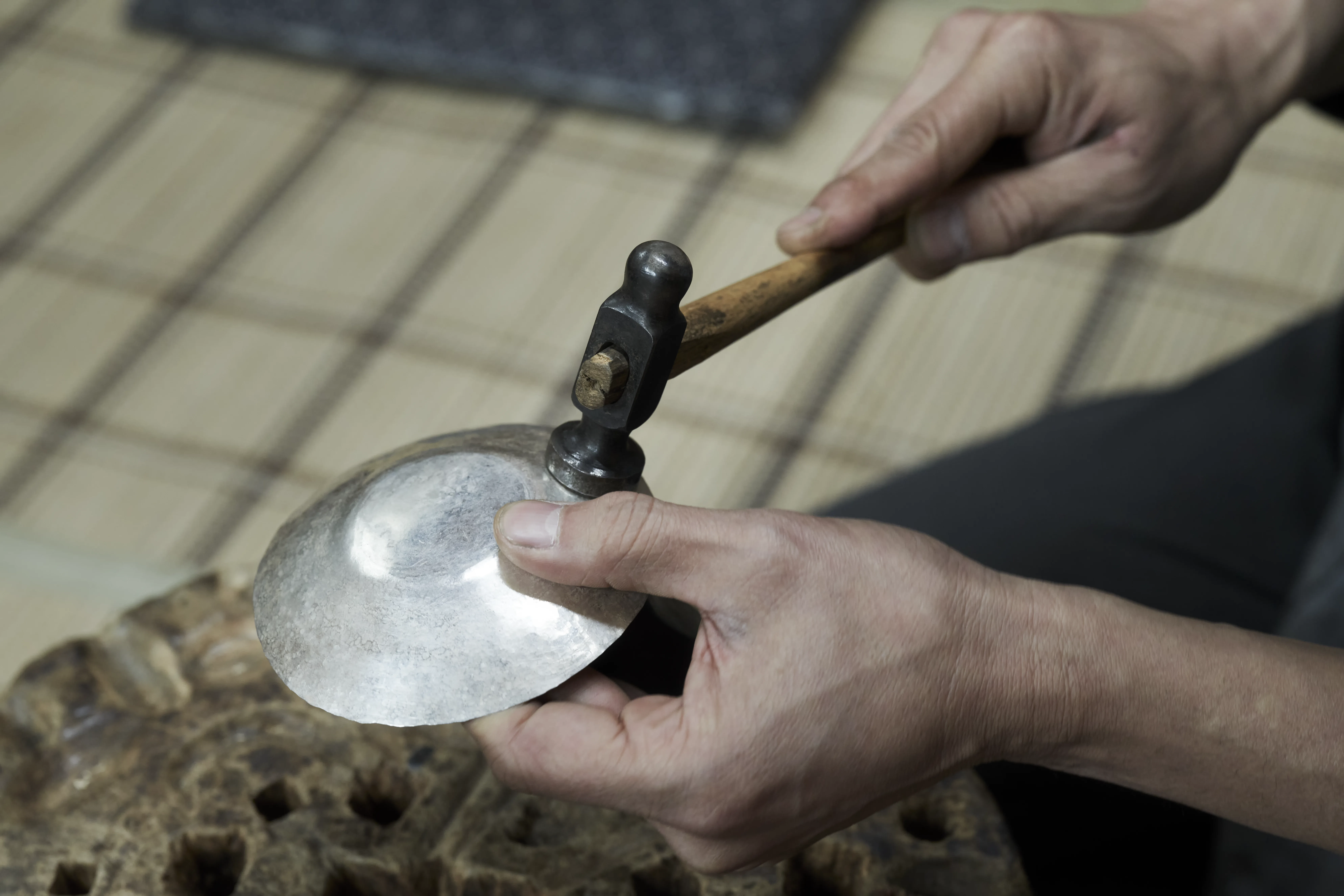
Sōhaku Kamikawa: I think that is exactly right. The sound, the smell, the movement and warmth of the hands striking silver with a hammer—all of it. For me, that sound was like a lullaby. If you ask whether I myself can now produce that same sound, then perhaps, as an artisan, I can produce it in the sense of pitch. But even so, that alone does not mean the same thing. I think the meaning of that sound will truly be passed on only when my own grandchild sits on my lap and we do ton-ton together. That is why I think it is so important to leave it behind as a feeling.
Toguri: And how about you, Sōki?
Sōki Kamikawa: For me as well, it is the same. From the time I was born, I was always near my grandfather, listening to that tonton-ton-ton rhythm. It was a comforting sound, and it still remains in my memory. Even as I grew up, the smell of the workshop, the sound of the hammer, and the workshop atmosphere itself were all part of daily life. So if you ask how long I have been in contact with the world of silver, it feels as though it has been from birth.
Toguri: It is striking that both of you first mention sound.
Sōki Kamikawa: Sound is very important. And it is not just a work sound. There are times when you feel, this is a good sound. When a particularly good piece is being made, or when there is real feeling for the customer, it can seem as though the sound and atmosphere are different. It is something that can only really be said through the senses, but you can feel, ah, there is something truly there in this. That is what makes sound both interesting and profound.
What emerges from this exchange is that inheritance at Gindendo is not simply “being taught the same techniques.” The sound of the workshop entered the body like a lullaby. The scents and air soaked in as part of daily life. Later, those memories come to hold meaning and become the foundation of what it means to inherit. That is why the inheritance they speak of has a depth that cannot be explained by technique alone.
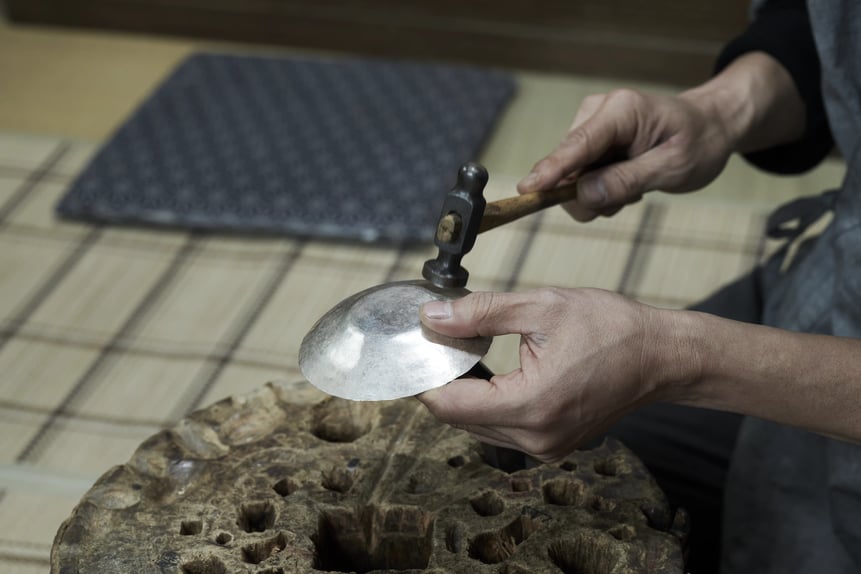
Sōhaku himself did not enter this path in a straight line from the beginning. He speaks of first stepping out into the wider world and experiencing a different site of making things, before returning and choosing this work again by his own will. There was a span of time there that cannot be reduced to the simple idea of inheriting the family business.
Toguri: While the family trade was right beside you, I imagine that as an individual there were other possible paths. How did you yourself come to enter this one?
Sōhaku Kamikawa: Because this work had always been part of my life, I did not at first see it as a “profession” or “job.” So I asked the 11th generation to allow me to study first in another place of making things, a company that operated around the clock. It was a site that supported Japanese industry, and there I was able to learn about the systems and roles of manufacturing. Because I had that experience, when I came back to the world of traditional craft, I was able to see that this world also required certain roles. Through various connections, I came to feel that I wanted to do this work as my own will, and I made my resolve and have been doing it ever since.
Toguri: So by taking some distance once, it actually connected you more deeply to the work you do now.
Sōhaku Kamikawa: Yes. In my case, there were many things I wanted to do, and I also had anxieties that came with being the son of an artisan. But because of that, I felt perhaps it was not yet the time, and I thought I should experience one thing at a time that I was able to do then. In the end, every single one of those things connects to where I am now. In that sense as well, I think it was all go-en—all connection.
What was also striking was his account of the difference in “the time of work” that became visible because he returned to the workshop after going through ordinary society. Sōhaku says that while the wider world has clearly defined time, preparation, and division of roles, household industry has another kind of flow of time. Waking early, not forgetting things, turning off lights that are not in use—he spoke of how even such seemingly small things are part of the need to order one’s life itself in order to make good things. Inheritance may include not only technique, but also how one orders daily life before technique.
At the same time, Sōki Kamikawa’s words carried a different kind of force.
Although he had been close to this work from the time he was born, he says that as a younger generation he naturally had his own doubts and struggles. He had also considered the path of employment. But the death of his grandmother and his father’s poor health came at the same time, and he says that facing the reality that “the cultural flame may truly go out” became a major turning point.
Toguri: You give the impression of having faced this path quite directly from a relatively early stage. What was the turning point for you?
Sōki Kamikawa: Of course, I had always loved making things, and because I grew up in an environment where traditional craft was close at hand, I had always felt its appeal. But when I was at university, as people around me were getting jobs and going on to different paths, I also had my own struggles about what I should do. Then, around February last year, my grandmother passed away, and at that same time my father also collapsed. My grandfather, the 11th generation, is elderly as well, and I felt right in front of me the reality that, at this rate, the cultural flame might truly go out. I think that once culture is lost, it can never be returned to what it was. So I felt that ten years later would be too late, twenty years later would also be too late—it had to be now.
Toguri: That was when your resolve was made.
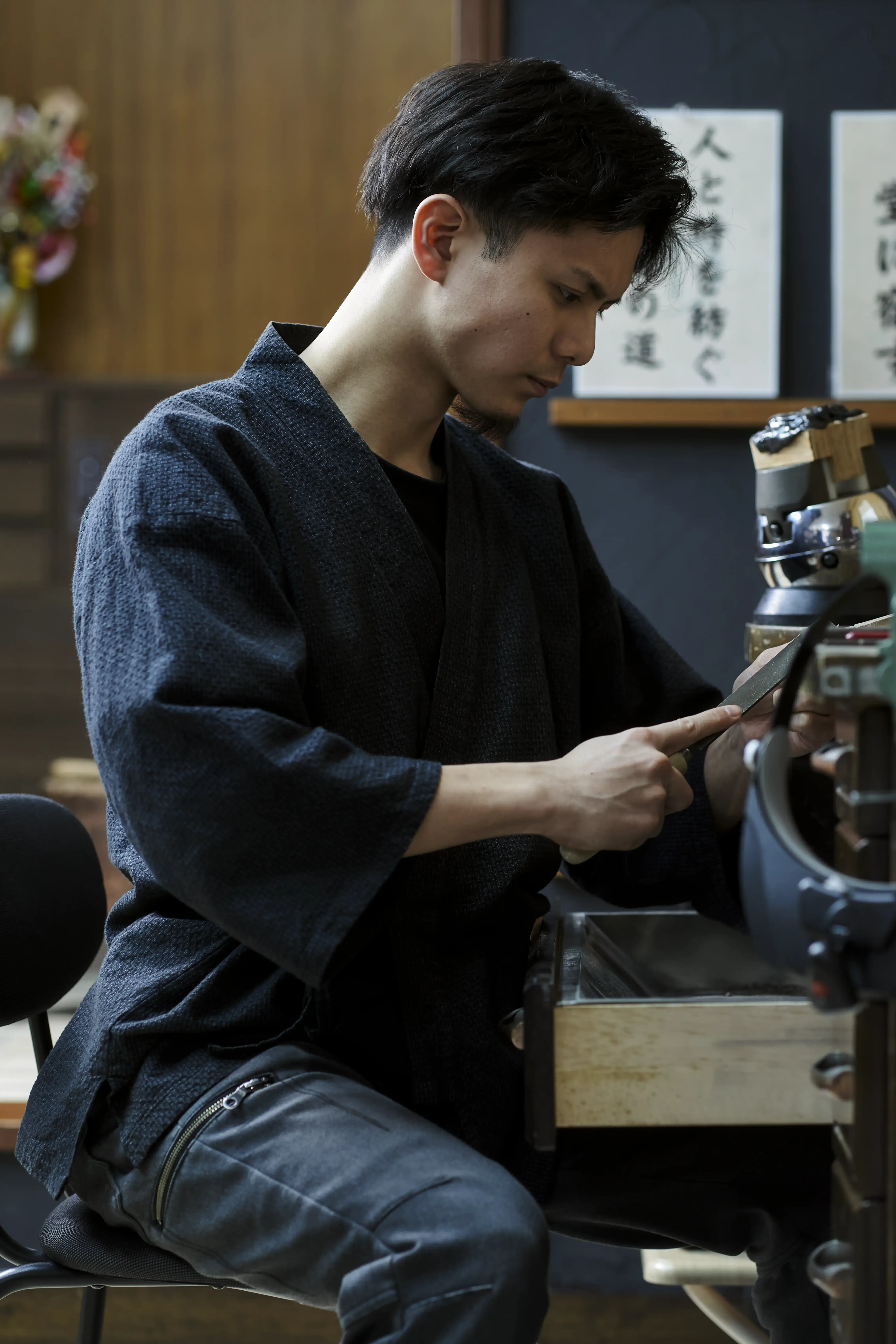
Sōki Kamikawa: Yes. I truly love both making things and tradition from the bottom of my heart, so I thought that first I should begin by making things step by step, with feeling, so that the customers before me would be pleased. And as the place for conveying that, I established Gindendo on May 23 of last year. Here, while training myself day by day, I want to make things into which prayer is placed, so that when they are handed into the customer’s hands, Shukufuku may dwell within them.
Shukufuku — a quiet blessing that comes to dwell in an object through care, time, and human connection.
What Gindendo calls “Shukufuku” is not a blessing bestowed from outside, but something that begins to reside in an object lovingly made and lived with over time.
Toguri: To begin a new brand, Gindendo, at the age of twenty must have been a very large decision.
Sōki Kamikawa: Truly, I was starting from a place where I did not know right from left. It was difficult because I began without knowing anything—how to make a company, how human networks work, any of it. But inside me there were two axes. One was that it was “enjoyable.” When I thought that by doing my best here, a culture of 400 years would be protected, I felt that this was nothing much—that I would do it with everything I had. The other was a sense of mission. If I do not do it, it disappears; if I do it, it remains. When I found myself standing in that place, I felt there was no choice but to do it.
If Sōhaku’s inheritance gained its contours by returning after seeing the outside world, then Sōki’s inheritance may be said to have been lit within him when he faced a flame that might be lost. Their points of entry are different, yet there is a clear point of commonality in what they say. It is that they do not allow inheritance to end with “protecting what has been handed down.” Sōhaku sees what he has received as a baton to be passed to the next generation, while Sōki thinks about how, as a member of his own generation, he must express and communicate it so that the flame is not extinguished. In other words, inheritance is spoken of here not as a passive act, but as an active practice of giving new life to something in the present age.
And that idea of inheritance connects directly to the idea of Atsurae that Gindendo holds dear. Rather than simply repeating inherited techniques as they are, it means giving form while thinking of the person before you and imagining even that person’s future. It is precisely for this reason, I think, that Gindendo’s making carries a resonance different from simple commissioned production.
More Than Custom-Made: What Atsurae Really Means
One of the largest axes in speaking with Gindendo was the word Atsurae.
As a Japanese word, it has a familiar ring, and yet when one tries to explain it precisely, it proves surprisingly difficult to paraphrase. In English, one may think first of “custom-made” or “made to order,” but listening to Sōhaku, it felt that there is something that inevitably falls away if one stops there. For Gindendo, Atsurae seemed to refer not merely to adjusting form to suit measurements or preferences, but to an attitude itself: thinking of the other person, and bringing a piece into being while looking toward the time that lies ahead of that person.
Toguri: Earlier the word Atsurae came up. I think that even for Japanese people it is difficult to explain when asked directly. What does Atsurae mean for Gindendo?
Sōhaku Kamikawa: Yes. If written in kanji, there are various ways of expressing it, and overseas some people describe it as haute couture. But I think the essential Japanese Atsurae, if I were to say it more plainly, connects to omoiyari—consideration for another.
Toguri: Consideration for another?
Sōhaku Kamikawa: Yes. It is not simply a matter of what I want to do, or how I want to make something. It is to think properly and deeply about the other person. And while shaping the piece, to imagine how that person will use it, and even to help create that person’s future together. I think that is the idea of Atsurae. As artisans of traditional craft, our role is to give proper form to that feeling. That is also part of Gindendo’s philosophy.
What Sōhaku was speaking of here was not merely commissioned production. If it were only a matter of hearing the customer’s wishes and making the piece accordingly, one could use a far more functional expression. But the word Atsurae carries a feeling of thinking not only of how a piece is shaped, but also of in what kind of time the person will receive it, on what occasions it will be used, and with what kind of feeling it may be given. That is why Gindendo’s making seems less like the act of handing over a finished product and more like the work of bringing forth something that will quietly accompany some part of the user’s life.
Toguri: So it is not only about adjusting the form, but also about considering how it will enter that person’s life and future.
Sōhaku Kamikawa: Yes. If we simply call it order-made or haute couture, the meaning becomes slightly different. Even when creating the form, we make it while imagining the customer’s life, future, and how it may be used. That, for us, is Atsurae.
Toguri: It feels as though when one tries to make it English, the most important part may instead slip away.
Sōhaku Kamikawa: It is difficult. The cultures are different. But even within the word “bespoke,” I feel there is something very close to it. In that sense as well, I feel a very strong point of understanding.
What was striking in listening to this exchange was that Sōhaku spoke of Atsurae as something spiritual—no, rather, as something of the spirit of traditional craft. People may often look at craft objects as beautiful completed things. But at Gindendo, what comes before that is the question of how one thinks, and how far one imagines. To imagine the other person’s background, to think of the time into which the piece will be received, and to consider how it will remain in the future. Because that imagination exists, even a silver vessel or spoon does not become merely a product, but something meaningful for its user.
This way of thinking also overlaps with Sōki’s reason for creating Gindendo as a place. He says that he did not want Gindendo to be merely a place where objects are lined up, but a place where various consultations can be received, and where people’s feelings can be taken in. In other words, what is valued here is not only the object itself, but also the dialogue that arises between people. Seen in that way, Atsurae may be not only a method of making, but also a word that expresses the way Gindendo itself wishes to exist.
Toguri: So Gindendo is not only a place where things are made, but also a place where one can come to speak about things.
Sōhaku Kamikawa: Yes. It is not merely a place where objects are placed. There was also the wish to create a place where various feelings and the consultations of many different people could be received.
In that sense, Atsurae at Gindendo may be said to be work that gives form to relationships beyond outward beauty. To make something for someone. To imagine the other person’s time. To think together toward a future form. The word Sōhaku repeatedly used—omoiyari, consideration for another—was not spoken as an abstract moral beauty, but was there as a practical standard that supports daily work. And it is because that standard exists that Gindendo’s pieces are not merely “made in response to an order,” but come into being as things “tailored for that person.”
This way of thinking is deeply connected to the nature of silver itself. Silver is not a material that is completed at the moment it is made and then ends there. Rather, it is something whose expression changes as it passes through time with its user. That is why it matters to make it while imagining for whom it is being made, and within what span of time it will be used. That may be why Gindendo’s Atsurae feels not like the adjustment of specifications, but like a promise made over a longer stretch of time.
Silver as Something Meant to Be Lived With
Listening to Gindendo, it becomes clear that silver is not spoken of merely as a “beautiful material,” but as a material to be lived with over time.
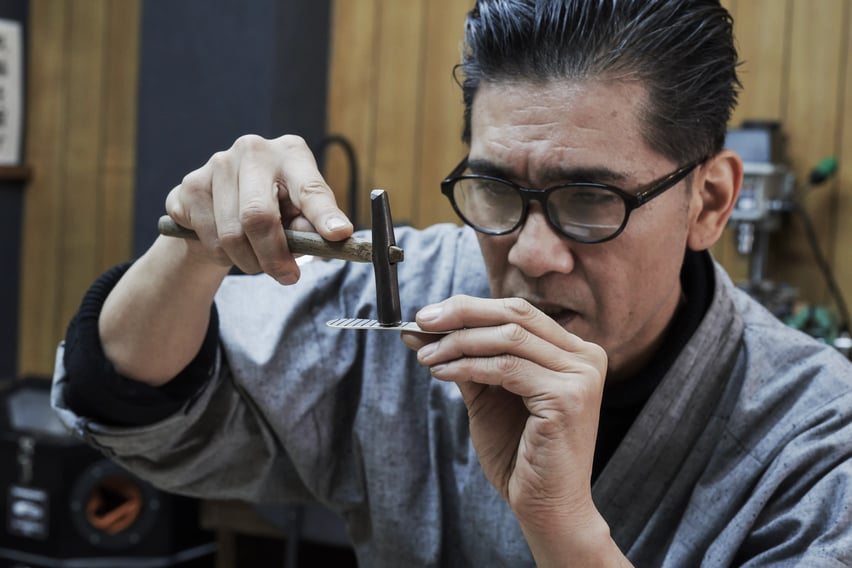
It is not a matter of seeking something glittering and complete from the beginning, but of silver changing through use, deepening through care, and slowly growing within a person’s life. This feeling differs somewhat from the general image of luxury. Rather, it seemed closer to a Japanese sense of beauty that finds value in quietness, lingering depth, and the character that only something long used can hold. Sōhaku expressed the essence of Edo silverware as “very simple, and yet allowing beauty to dwell within that simplicity,” and he also spoke of how silver acquires the depth described in Japanese as ibushi-gin—smoky silver—through long use.
Toguri: For both of you, what is the fascination or interest of silver as a material itself?
Sōhaku Kamikawa: Silver is a material used throughout the world, but I think its role differs somewhat according to culture. In Europe and America, it may be used as a symbol of wealth or luxury, while in Central and South America there are cultures that use it in daily life. In Japan, too, it has been used since ancient times, but it is at once very still, with a quiet appearance, and when used, its character and surface gradually change. I think that depth of feeling is one of silver’s great characteristics.
Toguri: So its value lies not only in its shine, but in how its expression changes through use.
Sōhaku Kamikawa: Yes. While shaping it, we face the sound when it is struck by hand, the changes in the material as seen by the eye, and the feeling returned through the hammer. By polishing it, it can become brilliantly luminous. But unless it is polished, it cannot reach that radiance. And then, through the care the user gives it afterward, silver grows—that is a phrase I often use. Silver is something that can grow while staying close to life.
What was striking in Sōhaku’s words was this expression, “to grow.” Even after leaving the maker’s hands, silver does not end there. Rather, from that point onward the user becomes the main actor, touching it in daily life, caring for it, and passing time with it, so that an expression particular to that person comes into being. What is being spoken of here is not silver as a craft object closed in completion, but as a vessel that lives through time together with its user.
Toguri: And how about you, Sōki? In facing silver as a material, what especially feels interesting to you?
Sōki Kamikawa: I truly think it is a material so deep that words cannot fully describe it. Historically and culturally, it is very deep, and even now I feel I still cannot arrive at an answer. There is the history of silver being used from the time Buddhism came to Japan, in court rituals and places of prayer, and when one actually handles it oneself, everything changes with the way one applies fire, the angle, the feeling that comes through the hand. Because its range of expression is wide, it is difficult, but I think that depth is what is unique to silver.
Toguri: So the depth of history and the difficulty and fascination you feel in your hands are connected.
Sōki Kamikawa: Yes. And this too is unique to silver, but what I find most interesting is that it develops character through use. Of course, it is important that we make each piece one by one while inheriting the feelings passed down from the past, and the baton of metalwork. But after that, the customer becomes the main actor. Here I hand it over in what is, for me, the fullest form of completion possible, but from there, through use, there emerges the taste called ibushi-gin. That is something only the person using it can bring forth.
What Sōki was speaking of here was the idea that the maker’s work does not end with “finishing it perfectly.” Of course, one prepares it as fully as possible by hand, and sends it forth with Shukufuku placed within it. But in the truest sense, the piece becomes that person’s only in the time that comes afterward. The habits of the hand, the rhythm of daily life, the way it is cared for, the occasions on which it is used—there is a depth that comes into being only through such accumulation. That is why it may feel more fitting to think of silver not as something to possess, but as something with which one remains in relationship.
Toguri: There is the phrase ibushi-gin in Japanese. Is that expression itself also something unique to silver?
Sōhaku Kamikawa: Yes, exactly. We do not say smoky iron or smoky copper in the same way. In Japanese there is the expression ibushi-gin. It carries within it things like refinement, the flavor that comes from long use, and depth. Silver is a very soft material among metals, but depending on how it is used, depth and character can gather within it. That is why, as makers, we feel we must create it with all our heart.
Toguri: So it is somewhat different from the idea that the newest state is the most beautiful.
Sōhaku Kamikawa: Yes. There are various cultures and techniques of giving form, but that is not the essence. I think what is asked of us as silversmiths in this age is to make things while imagining how what we make will be used in the future.
This feeling of “making while imagining the future” connects naturally with the Atsurae spoken of in the previous section. Because silver is a material that grows together with its user, it matters to imagine that person’s life and future at the time of making. One could even say that the very nature of silver as a material supports Gindendo’s idea of Atsurae. Completion is not the end. It deepens from that point onward within daily life. To make a piece while including that future time within it—that may be why Gindendo’s silverware feels like something more than a craft object.
It was also notable that when both Sōhaku and Sōki spoke of silver’s appeal, they always spoke not only of sight, but also of sound, touch, and sensation. The sound when struck, the feeling returned by the hammer, the changes when fire is applied, the light that appears when it is polished—silver is not a material to be merely looked at and admired, but one that gradually reveals itself through the use of the hands, through listening closely, through sustained attention. That is why Gindendo’s work requires not only visible beauty of form, but also the quiet concentration and accumulation of daily gesture that lies behind it. And as I asked about those invisible elements, another axis that supports Gindendo’s work came into view.
The Unseen Discipline Behind the Workshop
As I listened to Gindendo, I became aware that behind the visible works and tools there is another layer.
It is something like an invisible discipline that supports daily work. Offering one’s hands in prayer each morning. Giving thanks to the household shrine and local deity. Treating tools not merely as instruments, but as presences that have inherited time. These may be things difficult to convey through ordinary “descriptions of works.” And yet both Sōhaku and Sōki repeatedly spoke of how making things cannot be sustained by manual technique alone, but becomes work only when it includes the feeling with which one faces it. They bring into daily life gratitude for being allowed to work in that community, and regard sincere engagement with the customer as a premise of their work. That attitude seemed to appear just as it is in the quiet air of the workshop.
Toguri: What struck me while spending time in the workshop was not only the visible work, but also the gestures and ways of facing things before and after it. What is important to you in daily work?
Sōki Kamikawa: Japan has a history in which traditional crafts have continued for hundreds of years, but the culture of the Japanese gods—Shinto—has continued for more than two thousand years since the nation’s founding. I feel that our gratitude toward that is no ordinary thing. It is truly remarkable that such a culture has continued to live within people’s daily lives. So, since I was born in Japan and am allowed to work here, I feel that giving thanks for that and doing my best here may also be part of my mission.
Toguri: And that connects to your morning prayers and putting your hands together.
Sōki Kamikawa: Yes. We make sure to incorporate it into the full twenty-four hours of daily life. To give thanks for being allowed to work in this region. And also to prepare our hearts so that we may sincerely make good things for our customers. When the day’s work is done as well, we end by bowing and saying, “Thank you very much.” We do make objects, of course, but in the end I think what matters tremendously is with what kind of feeling, and in what way, one faces the work.
Listening to Sōki, it became clear that prayer is not separated out as some special ritual, but exists as the very attitude by which one enters work. Making good things, being sincere toward customers, continuing work within a community—before these take visible form, one first puts one’s heart in order. That attitude is built into the gestures of each morning. That is why, in this workshop, praying and making seemed not to be separate acts, but naturally connected.
Toguri: You mentioned that the household shrine itself has been passed down from earlier generations. Are there also differences in how each generation relates to it?
Sōhaku Kamikawa: The household shrine has always been there from the previous generations. But the way one faces it differs from person to person. For example, if it is simply “because the shrine is there, the father manages all of it,” then I feel something is lost. It is important not only that it exists as a cultural form, but that each of us takes in for ourselves why the shrine is there, and how we should face it. For us, rather than directing ourselves toward one identical deity alone, it is important to place our hands together before the local deity of this region, before all things in nature, and to bring into our making a spirit of daily gratitude and prayers for everyone’s Shukufuku.
What Sōhaku was speaking of here was the feeling that culture does not consist only in preserving form. It is not simply a matter of continuing something unchanged because it came from the previous generation, but of receiving its meaning in one’s own way and allowing it to live within present work. This is also connected to the ideas of Fueki Ryuko and inheritance spoken of earlier. One does not change what is essential, and yet one receives it again in one’s own words and practice for the present. That attitude appeared even in how they face the household shrine.
Fueki Ryuko: the Japanese notion that true continuity lies in preserving what is essential while allowing form and expression to change with the times.
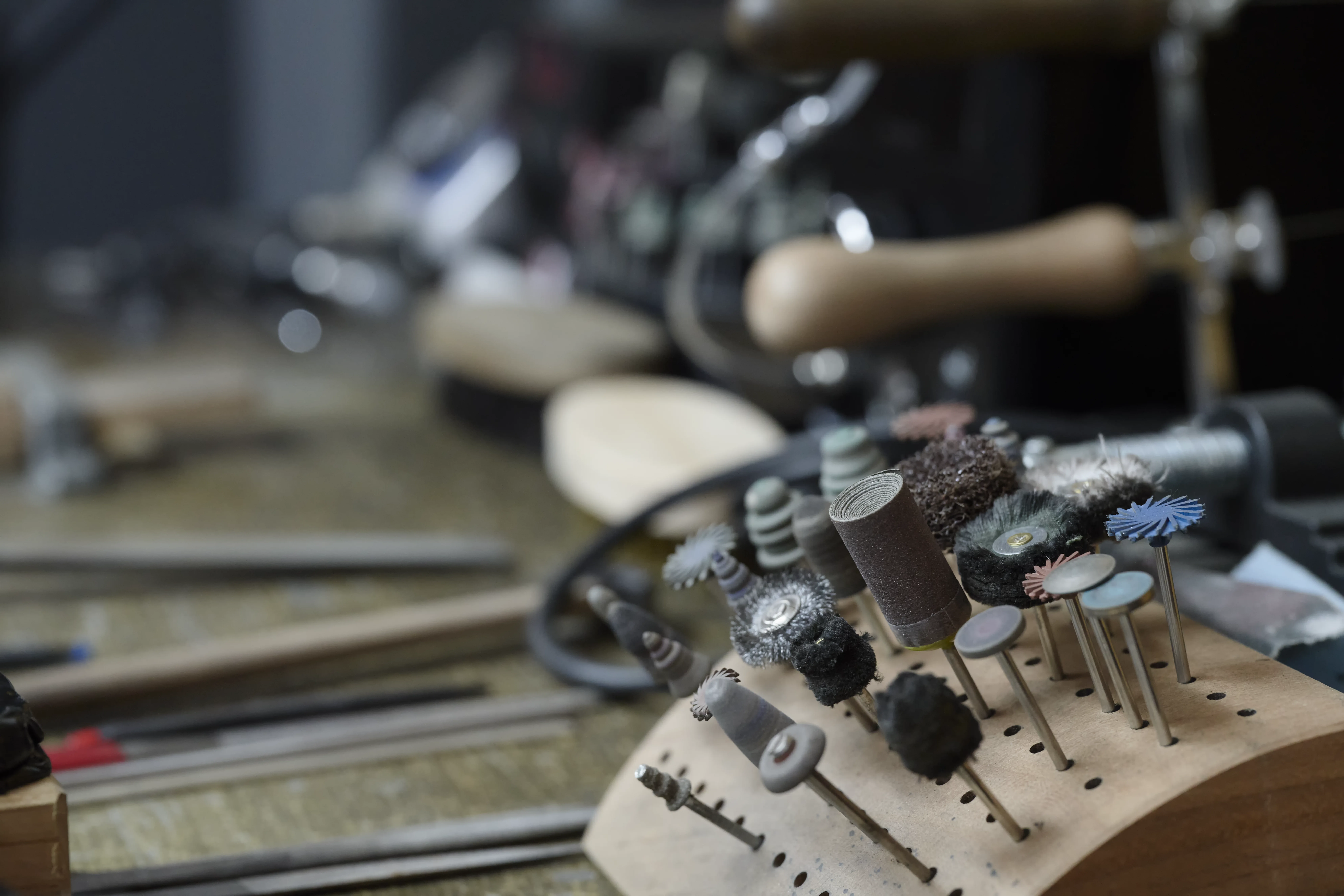
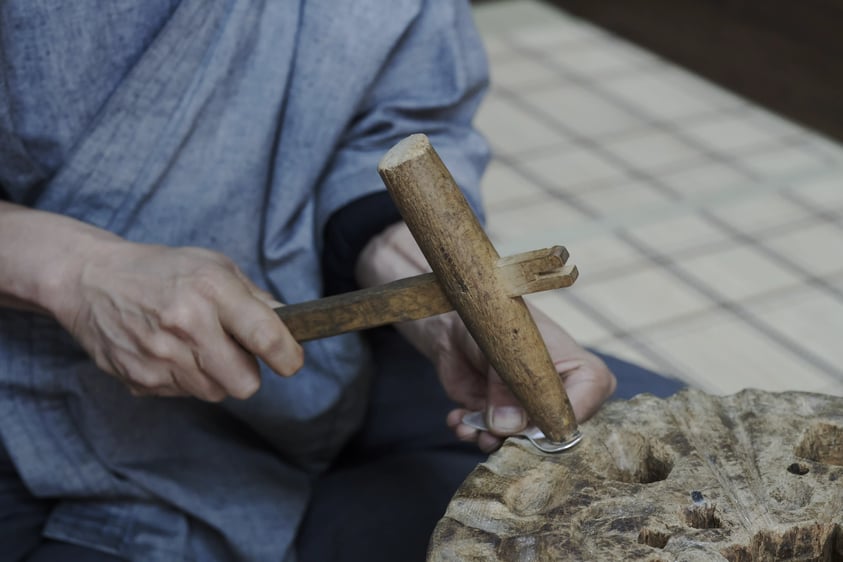
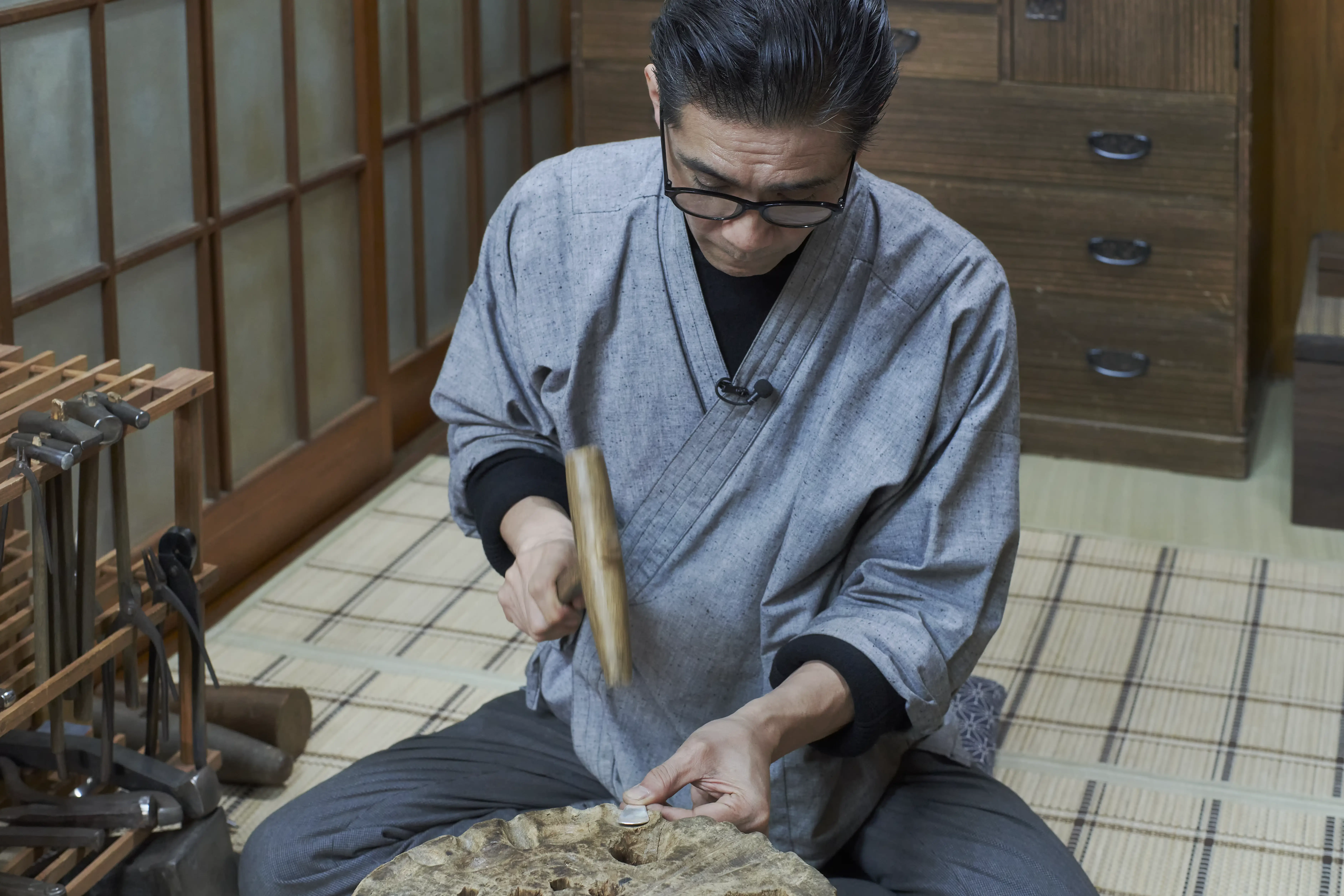
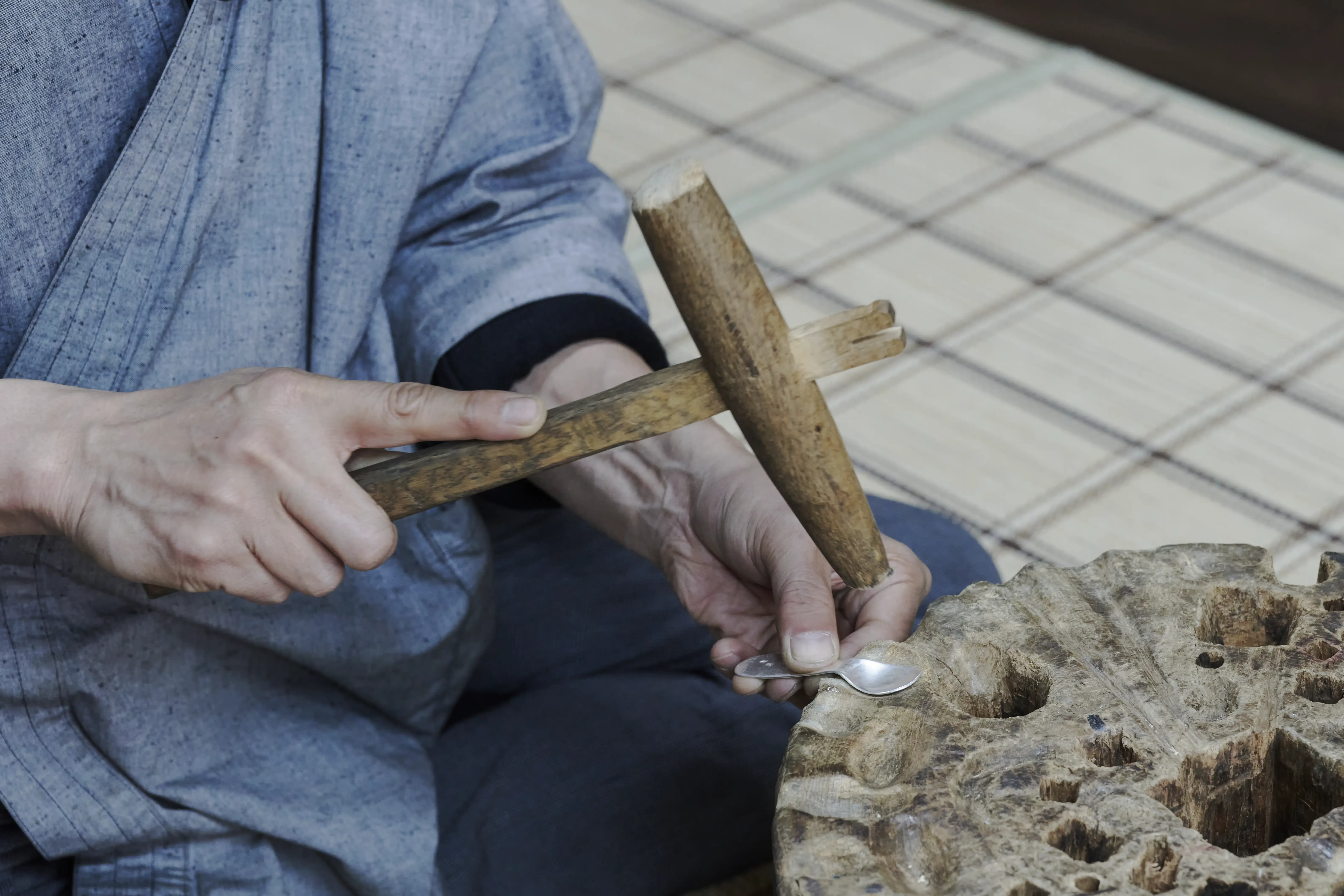
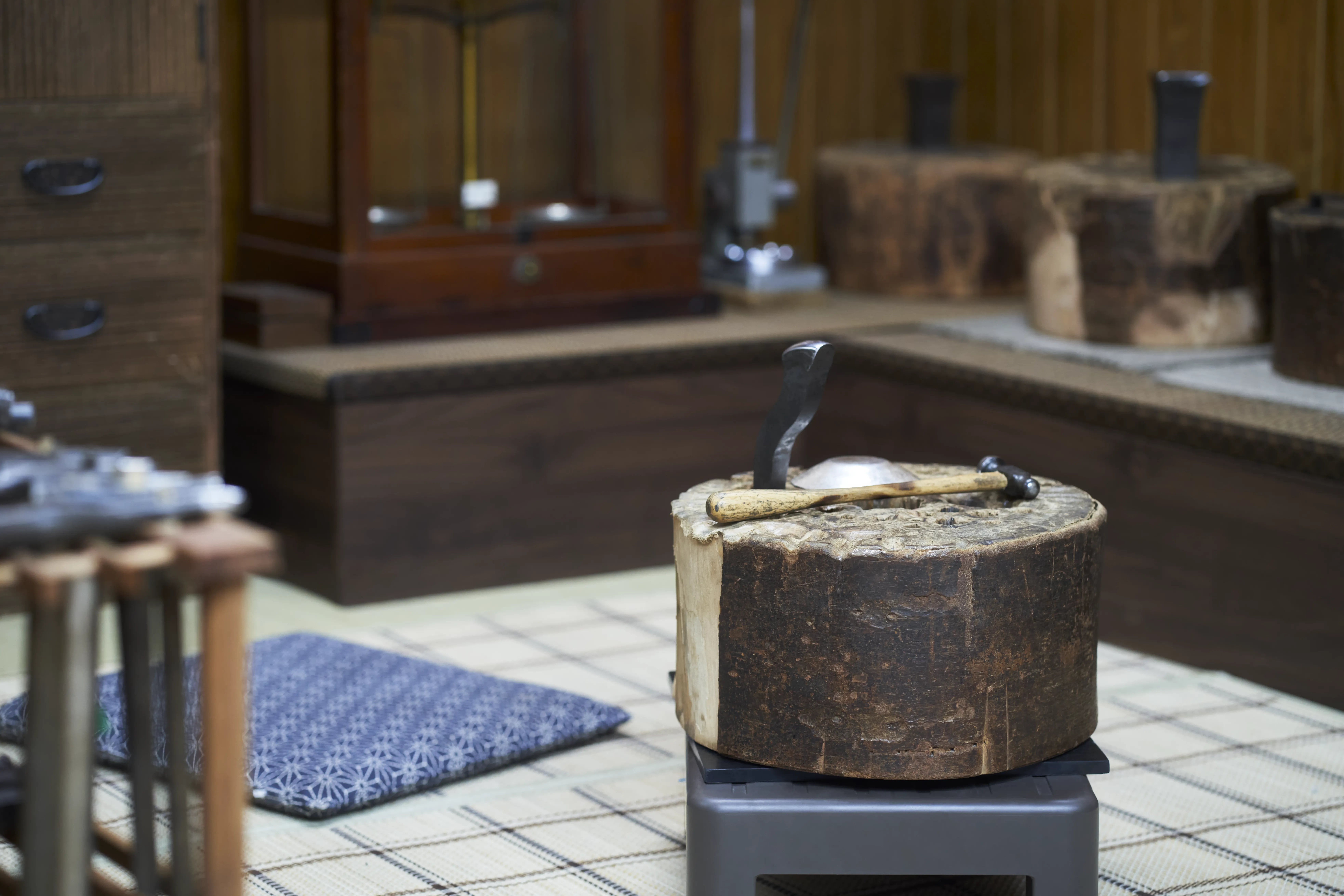

This invisible discipline also appeared clearly in their attitude toward tools. Some of the wooden blocks and hammers used in the workshop, they say, have been in use for nearly a hundred years. For instance, tools made of mountain cherry wood are not spoken of as things that remain simply because they are old, but as things still fully alive in use, and as presences that continue to bring new discoveries the more they are used. Both Sōhaku and Sōki seemed to receive tools not merely as “objects,” but together with the feelings with which they were made, and the span of time through which they have passed. It felt especially symbolic when Sōki said, “The tools teach us.”
Toguri: Earlier, I was struck by the phrase that the tools “teach you.”
Sōki Kamikawa: Yes. Even if I think with my own head alone, “I will strike with this tool in this way,” a great mismatch can arise. The size differs depending on the piece, and the shapes of the tools also differ. So in the end it feels as though the tools themselves teach me which tool fits, and how it should be used. Even when I was a student and came home from school, there were things I learned by watching how the earlier generations used them, and even now there are moments when I realize, ah, this is how it is used.
Toguri: So the tools, too, are part of inheritance.
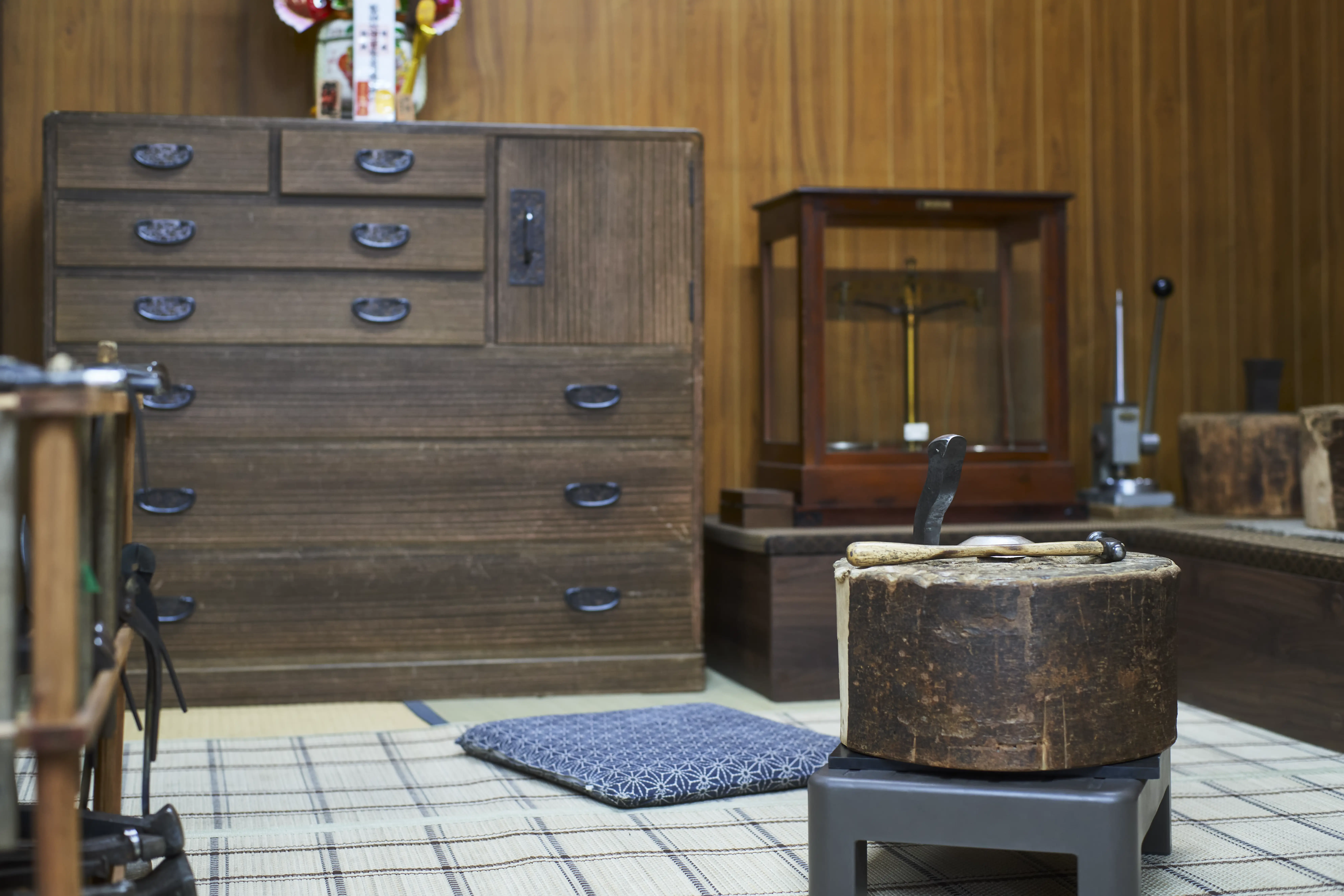
Sōki Kamikawa: Yes. For example, the wooden stand we use now in our hands-on experiences has continued for nearly a hundred years. And the reason it is still in such beautiful condition is, I think, because the artisans of that time made each one with feeling and cared for it properly. They must have thought about everything from the log stage—how long to dry it, where to make the holes, how to make it easy to use—and even now I find new things in it every day. Things I could not understand a year ago become clear now: ah, this is how these are used together. So truly, the tools teach us.
Toguri: For you, Sōhaku, what do you feel toward such tools?
Sōhaku Kamikawa: Gratitude. Truly, gratitude. There are tools that we use now as the 12th and 13th generations, and there are even larger tools in the work area that were made in the era of the 11th generation. To be allowed to use such things is something I am truly grateful for, and I think it means showing respect. Traditional craft is not something that can be fulfilled simply by making things to exact measurements. Tools, oneself, those who came before, the region—all of it together is what we offer as time to the customer.
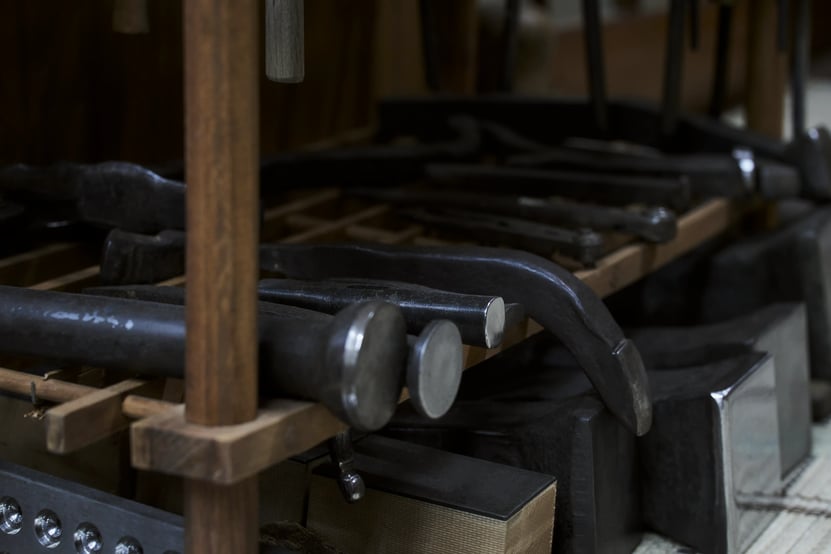
This feeling of “offering time” that Sōhaku spoke of seems very important. A piece of traditional craft does not refer only to the completed object, but includes the history behind it, the attitudes cultivated there, the relationship with the region, and the memory held in tools that have continued in use. That is precisely why the pieces made at Gindendo carry a quiet thickness and depth somewhat different from mere beauty or rarity.
What was also striking was that Sōhaku sees these tools and even the surrounding environment as things that, too, may be lost, and thinks about what can be done so that the flame does not go out. The artisans who make the tools are disappearing. Without a relationship with the local community, the sound of the workshop can come to be heard as mere noise. Faced with such realities, he does not end with saying, “It cannot be helped,” but speaks them as issues, shares them with others, and searches for even small possibilities of restoration. That attitude, too, feels like part of the invisible discipline. He said he wishes to keep the traditional flame properly lit, so that it will not go out as much as possible.
Toguri: So it is necessary to continue protecting not only the tools themselves, but also the environment around them.
Sōhaku Kamikawa: Yes. In the past, when information was insufficient, people in the field would say that even the artisans who make these tools were facing the possibility of disappearance. But if, at that time, one simply ends with “it cannot be helped,” then it will truly disappear. Even now, if we can properly put into words that such tools no longer exist, or that such environments are changing, and face them as issues, then perhaps networks may widen with people in other regions or with other artisans, and restoration may become possible little by little. So I want to keep the traditional flame as properly lit as possible, and not let it go out.
Seen in this way, the quietness of Gindendo’s workshop does not arise simply because it is a calm space. It is because there are daily prayers, gratitude toward the region, respect toward tools, and the consciousness of carrying what has been entrusted by earlier generations forward to the next. Because of these invisible accumulations, this place seems to hold both a distinct tension and a softness. And that connects directly to what visitors themselves can feel in the experience. To visit Gindendo is not simply to make a silver spoon, but also to touch the layers of time themselves.
Closing
What is inherited at Gindendo is not only the technique of shaping silver. The work of this workshop continues together with the memory of the striking sounds heard beside a grandfather’s knees, the quiet concentration with which one faces material, the attitude of tailoring a piece while imagining even the other person’s future, and the daily prayers and gratitude toward tools. Listening to Sōhaku and Sōki, one feels that inheritance is not only the act of protecting something, but the practice of asking how its essence may be given life again in the present age and handed on to what comes next. What Gindendo seems to value is not repeating the past as it is, but giving form once more, for the person before them now, without letting the inherited flame go out.
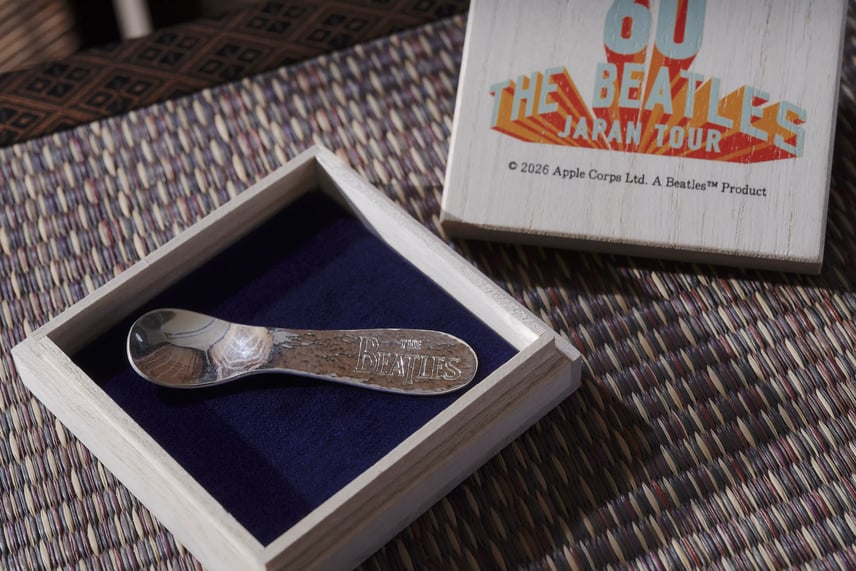
That attitude also appears in Gindendo’s present efforts. At the time of writing this article, as one attempt to embody Fueki Ryuko, Gindendo is also planning and offering a piece called the “Shukufuku Spoon” to mark the 60th anniversary of The Beatles’ visit to Japan—an event that had a major impact on Japan’s music scene. It seemed to me to be a very Gindendo-like practice: preserving what is essential in what has been handed down, while binding it once again into a form that carries new meaning within a contemporary context.
And this way of thinking appears clearly in the nature of silver itself. It does not end in completion at the moment it is made, but slowly grows in the hands of the person who uses it, deepening in character over time. It does not place value only on the state of being new, but looks also toward the depth that appears through continued use. Thinking of silver in this way, one may say that Gindendo’s work is not simply to make vessels or spoons, but to hand over something that stays close to a person’s time. In what is made here, it felt as though not only beauty of form, but also the time still to come, had been quietly woven in.
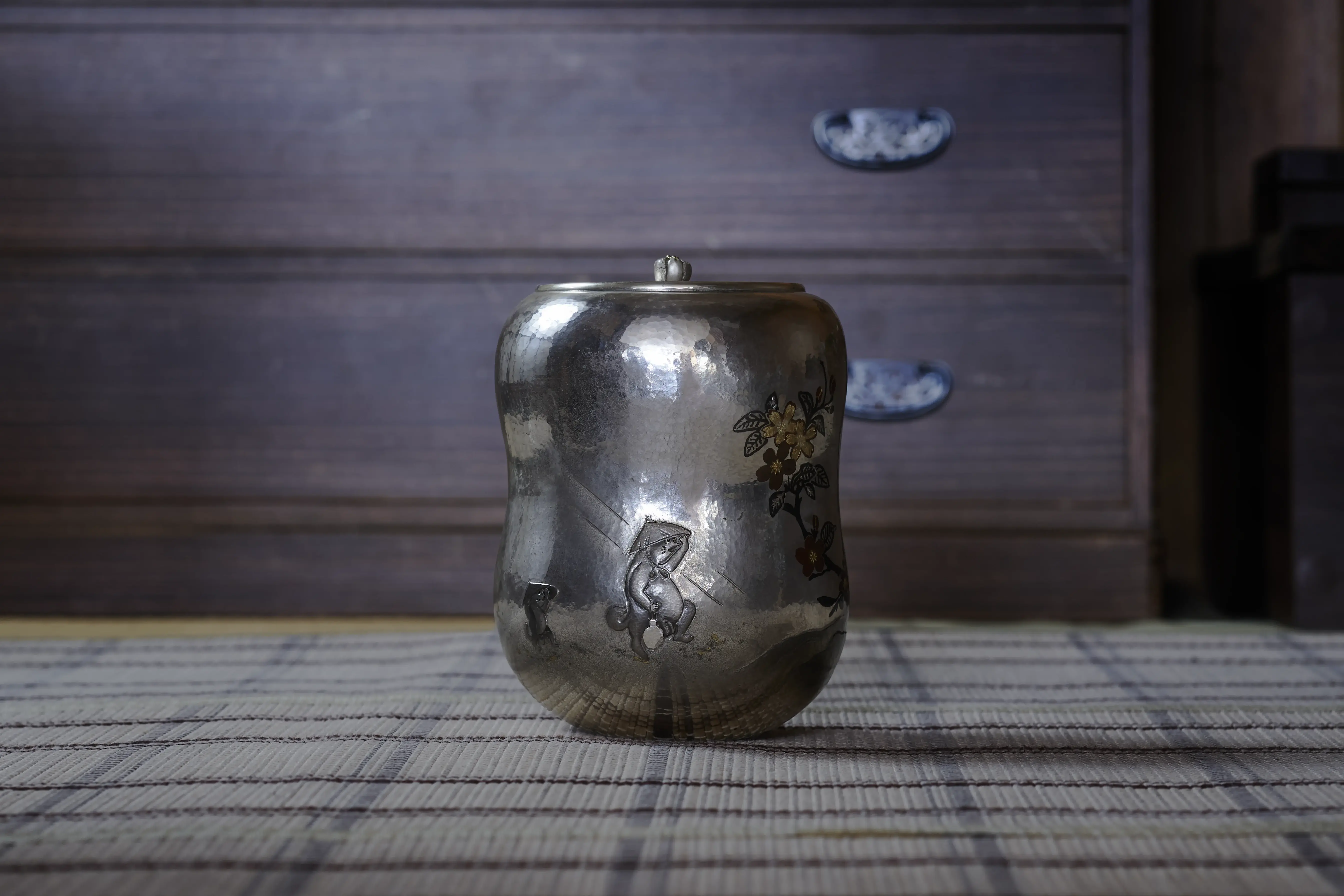
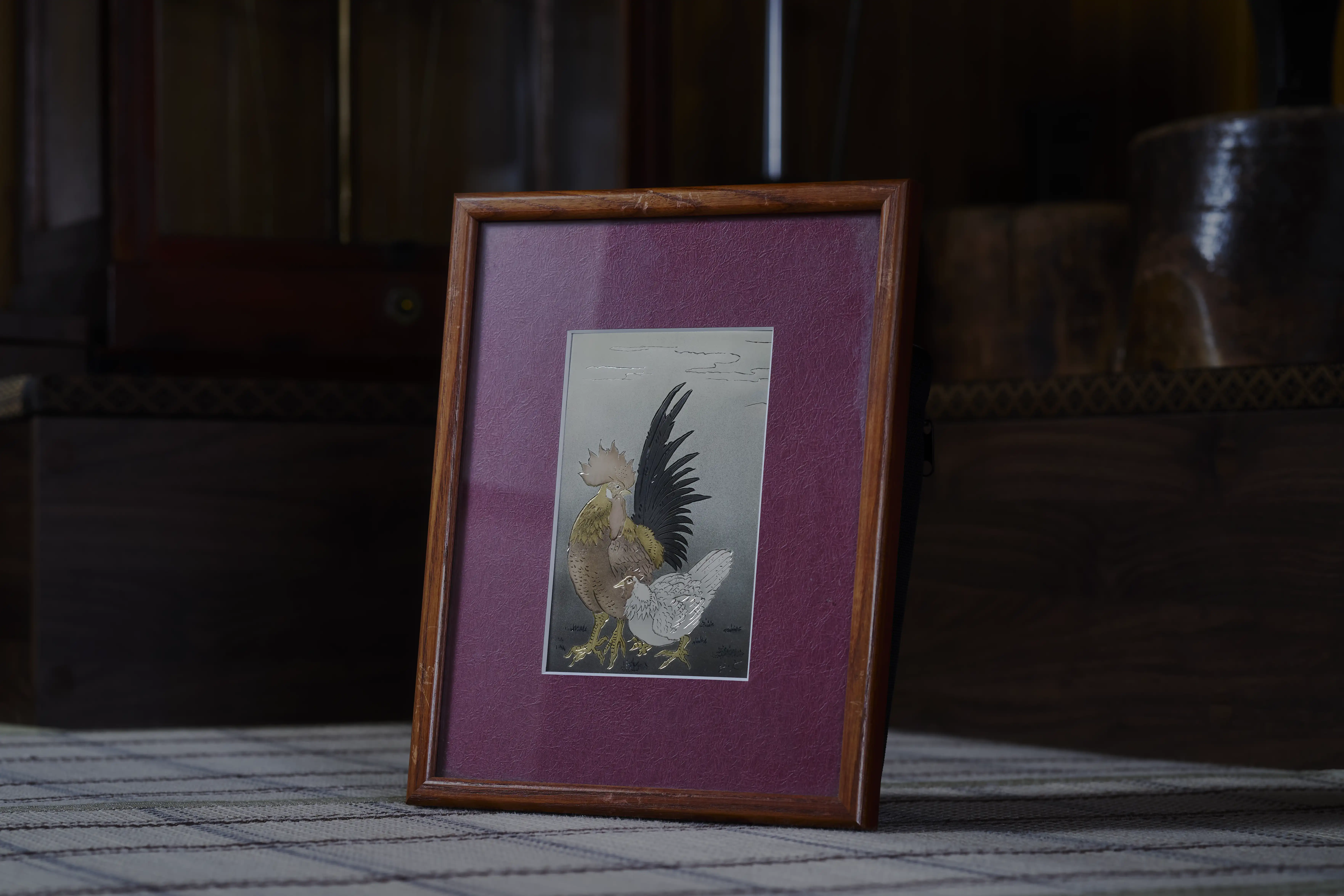
To visit Gindendo is not simply to “see” traditional craft, nor merely to “experience” it, but to touch briefly the feeling of time that flows beneath it. The sounds that echo through the workshop, the rhythm of moving hands, the long time engraved into the tools, and the feelings that have been handed down without ever being fully put into words—all of these overlap to form the quiet strength of this place. What Gindendo protects may not be only the tangible form of silverware, but that very layering of time itself. That is why each piece encountered here seems to hold a depth somewhat different from a mere possession—a depth worthy of a long relationship.