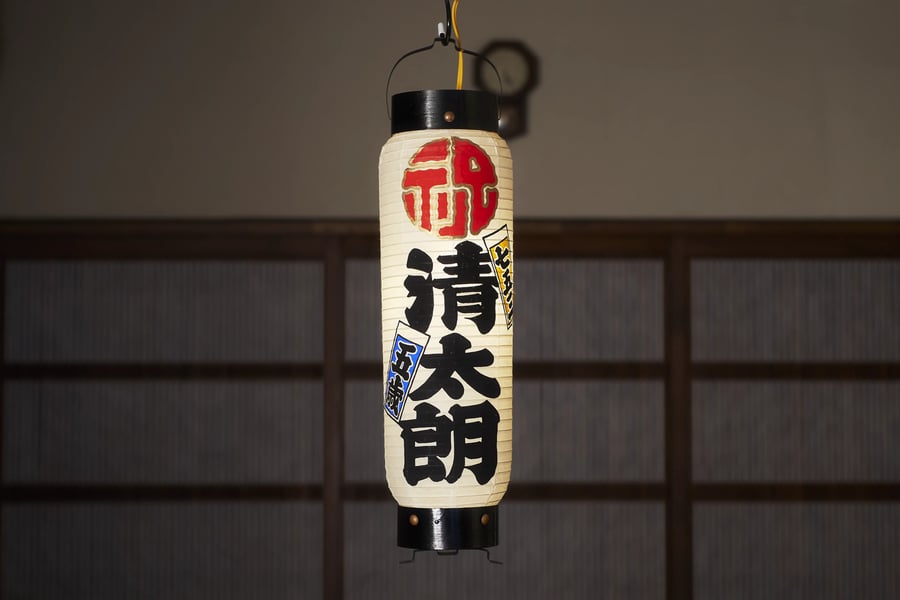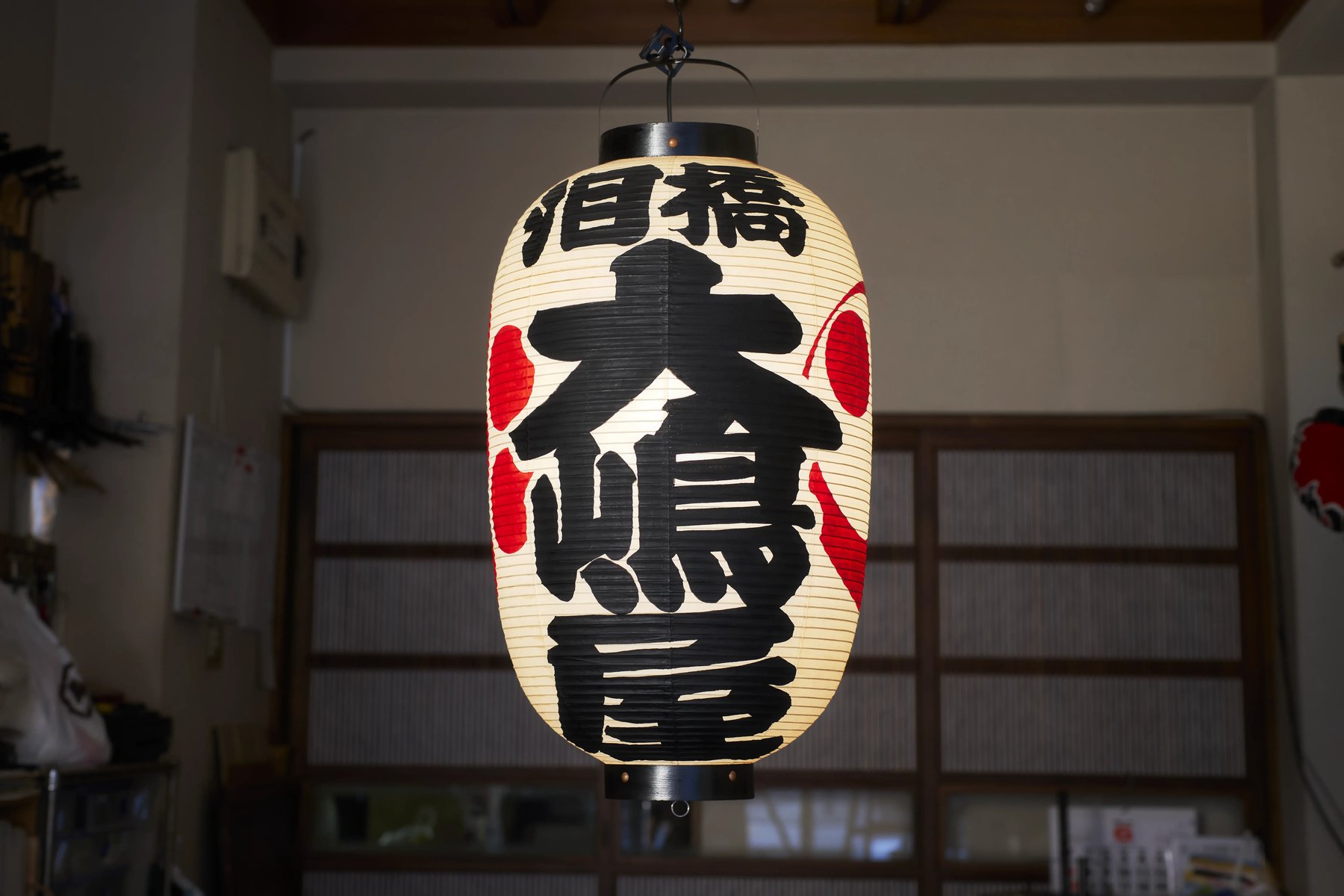
A paper lantern lettered with the Ōshimaya name, lit against a dark wall
Craft — Edo Chōchin

Chōchin: Writing Your Own Paper Lantern in a Tokyo Workshop Founded in 1913
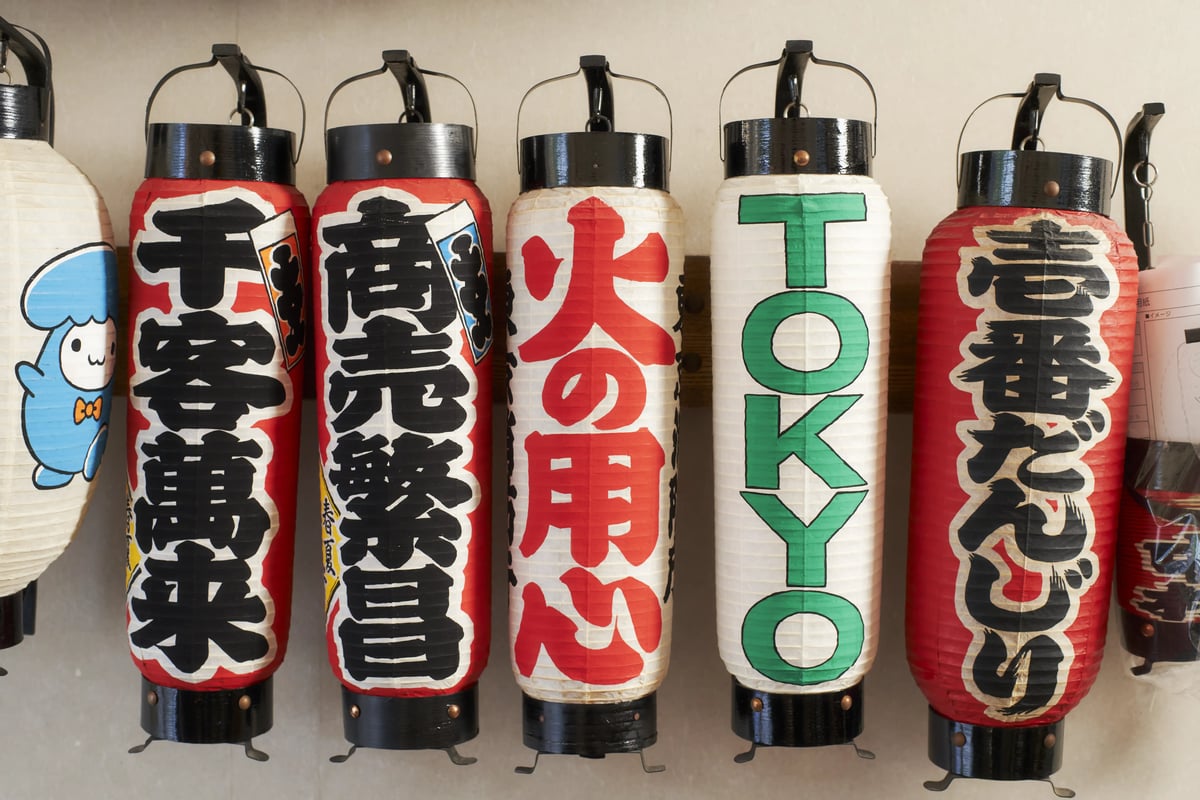
A row of hand-lettered chōchin hanging in the workshop
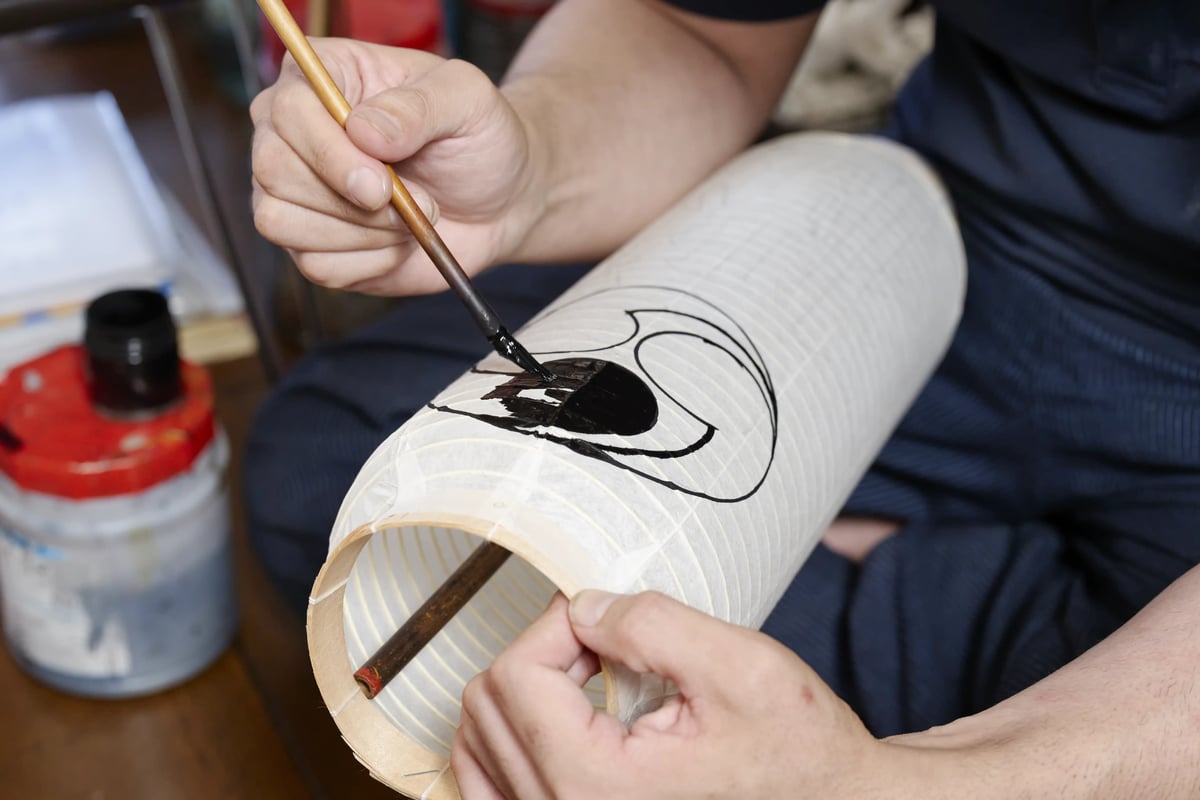
A brush laying down the black outline of a crest on a lantern
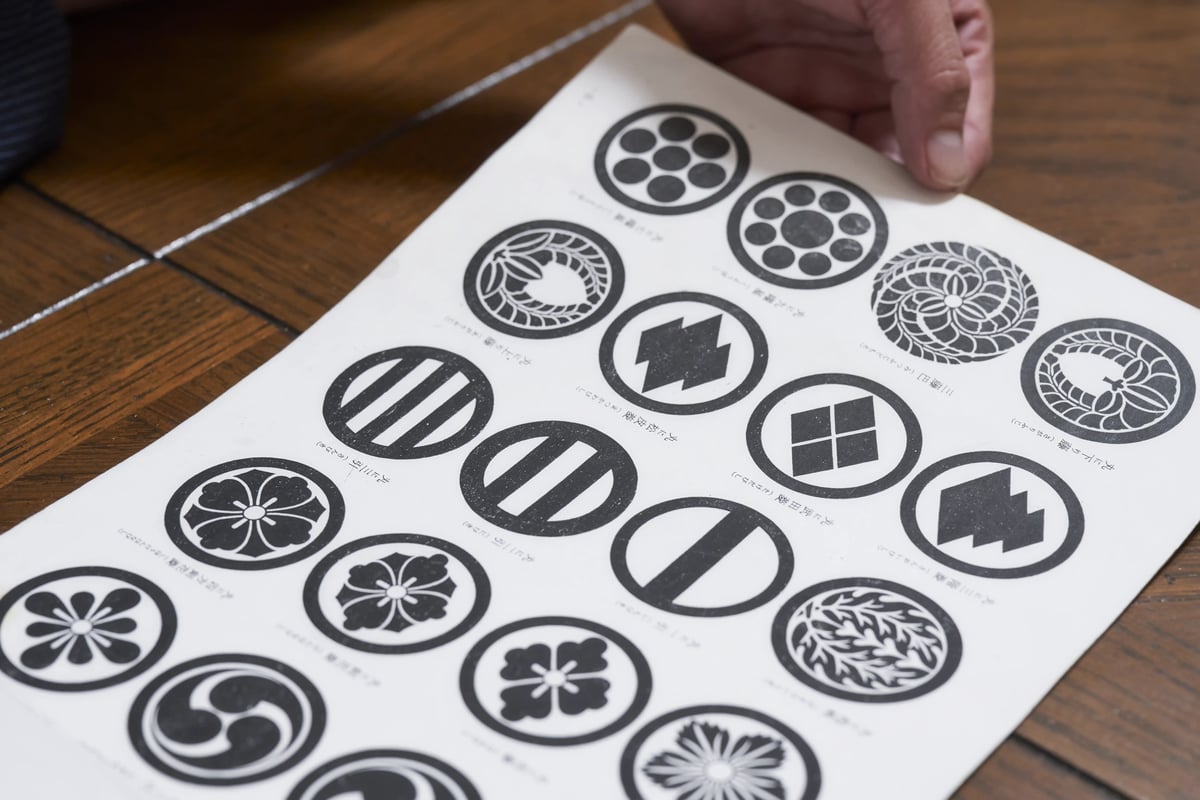
A printed sheet of family crests used for reference
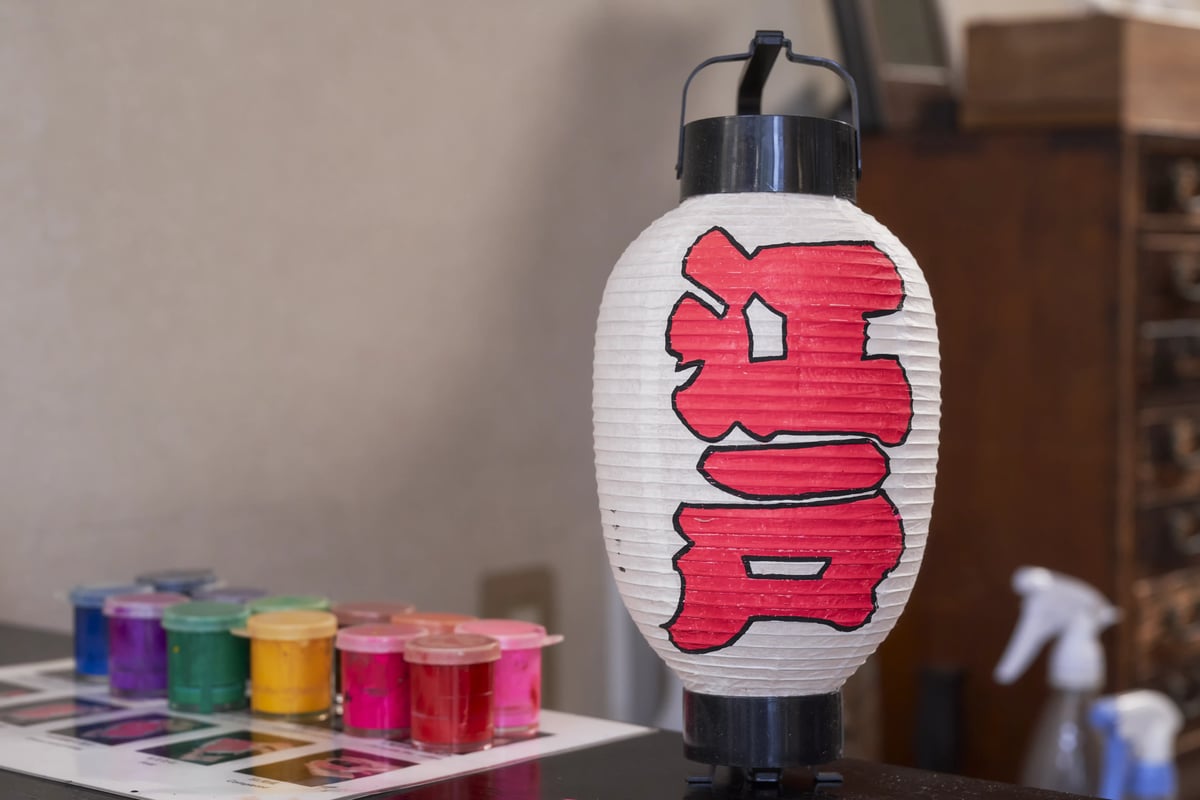
Pots of coloured paint beside a lantern lettered in red

The Craft

The chōchin arrived from China, by Murata's account in the Muromachi period, when candle flame was the only light there was. Folding lanterns and cheaper candles brought it to ordinary households in Edo, and after electricity it lived on in festivals, shrines and shop signs. Its lettering, kago-moji, is drawn outline first and filled in from the edge.

The Artisan

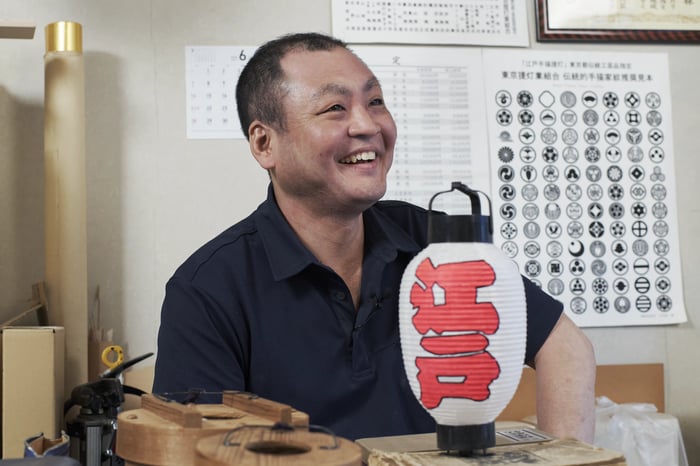
Namidabashi Ōshimaya has written lanterns at the Namidabashi intersection in Tokyo since 1913, one of several shops to carry the Ōshimaya name after the main house in Asakusa was lost in the war. Kenichiro Murata, the fourth generation, spent three years drawing nothing but family crests before he was allowed to letter.

What Makes It Different

You write onto a lantern that is already stretched and three-dimensional, not onto flat paper. Murata prepares a pencil sketch of your word, crest or logo in advance and stays one-on-one throughout — and if the third generation is working that day, he is at his own bench in the same room.

The Experience

The workshop sits on a corner by the Namidabashi intersection, lanterns hanging overhead. Before you arrive, Murata asks what you would like to write — a name, a favourite word such as ai (love) or fuku (good fortune), a family crest or a logo — and pencils it onto the lantern, sized to fit. On the day you take the outline in black first, then fill the character in from the edge inward, the way every Edo chōchin is lettered. Almost everyone says the same thing once the brush is in their hand: this is harder than it looks. The surface is bumpy, so a stroke skips; there is a light inside, so every uneven patch shows once it is lit. Then the lantern goes home with you.

  • Lettering your own chōchin — outline first, then filled in from the edge inward
  • A pencil sketch of your word, crest or logo, prepared by the fourth generation in advance
  • The finished lantern, to take home the same day
  • Time in a working workshop where two generations letter side by side
Discover Behind the scenes — Namidabashi Ōshimaya
Itinerary

This Is a Sample Itinerary

Sample, not a fixed schedule Shown to illustrate the kind of layered day we build, not a fixed schedule. Exact timing is confirmed only after a private consultation.

Here's how a visit typically unfolds, from pickup to drop-off.

  1. Hotel pickup by an English-speaking guide, who stays with you for the visit
  2. Arrival at the workshop by the Namidabashi intersection, under the hanging lanterns
  3. How the chōchin came from China and found its way into Edo life, festivals and shop signs
  4. Kago-moji explained: why a lantern is outlined first and filled in, never written in one stroke
  5. Your turn: tracing the pencil sketch prepared for you, laying down the black outline
  6. Filling in, with your choice from the colours kept on hand
  7. Conversation with Kenichiro Murata — and, if he is working, the third generation at his bench
  8. Private transfer back to your hotel, with your lantern

What's Included

Private one-on-one session with Kenichiro Murata at Namidabashi Ōshimaya
A pencil sketch of your chosen word, crest or logo, prepared in advance
A stretched chōchin, brushes and paints
The lantern you letter, to take home the same day
English-speaking guide for the visit
Hotel pickup and drop-off in central Tokyo
Not included: transportation beyond central Tokyo, personal purchases
Enquire →

Meet Your Artisan & What to Know

Kenichiro Murata
Kenichiro Murata Fourth generation, Namidabashi Ōshimaya — Tokyo Read the full interview on Our Masters →

Kenichiro Murata only decided to take on the family trade a year after technical college, once he had started helping in the workshop. His father, the third generation, made the work look easy; Murata found he could not do it at all. He was set to draw family crests for three straight years before he was allowed near lettering — the crest has a fixed form, and learning the looser thing first, his father said, makes the strict one go sloppy. The standard he still works to is his father's: make work that holds up to a fellow professional's eye.

Their Work
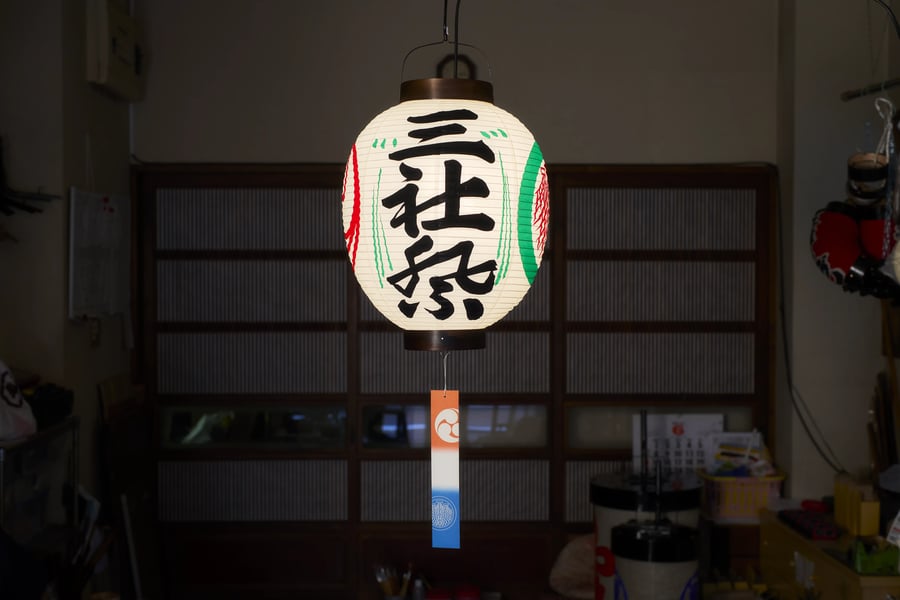
A festival lantern lettered for the Sanja Matsuri
A tall lantern lettered with a name in black and red
  • This is a working shop, and the third generation may be at work on orders; please stay with your guide.
  • Tell us in advance what you would like to write, so the pencil sketch can be prepared.
  • Unevenness is part of lettering by hand. Few first lanterns come out the way people expect.
  • Talking while you work is welcome — this is not a silent craft.
  • Photography and filming are confirmed in advance with your guide.

About This Experience

Do I need any experience with a brush?

None. The pencil sketch is prepared in advance, so you trace and fill rather than start from a blank lantern, with Murata guiding you throughout.

What can I write?

A name, a favourite word, a family crest or a logo. If kanji are new to you, the workshop keeps a list of characters visitors often choose, such as love, family and good fortune.

Can I take my lantern home?

Yes, the same day.

Can children join?

Yes. Families often letter together, and talking while you work is welcome.